 Often gentle, still busy
Waikiki, Hawaiʻi
Reef breaks and long, rolling waves have shaped its longboard culture. Crowds, reef and changing conditions still call for care.
Start / field note 01
A memorable first surf is less about a famous name than a modest read of the shore: where water moves, who is already surfing, what the wind is doing, and whether today suits your experience.
Start with the shore
Before carrying a board down, pause above the tideline. Look for the channel where whitewater is not breaking, the people already in the water, the sets that arrive between lulls, and the route back to shore. A beach can be mellow one morning and demanding by afternoon.
For a new surfer, that observation is equipment. It helps you choose a supervised lesson, a sheltered corner, or a day for watching instead.
Find Your Starting Beach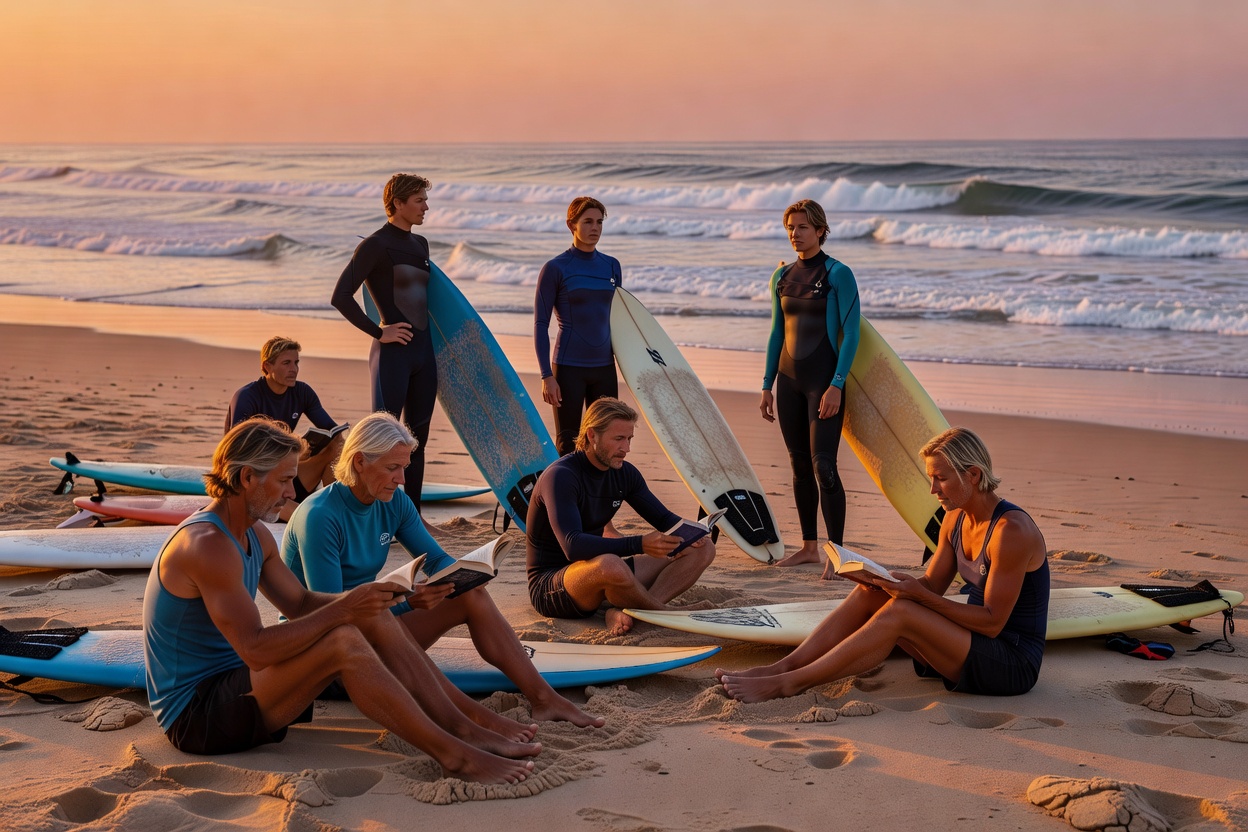
A few minutes of watching can reveal changing peaks, currents and crowded take-off areas.
Field notes 02
Use place names as prompts for research, not promises. Tide, swell direction, wind, sand movement and local rules change the practical character of a break.
Often gentle, still busyReef breaks and long, rolling waves have shaped its longboard culture. Crowds, reef and changing conditions still call for care.
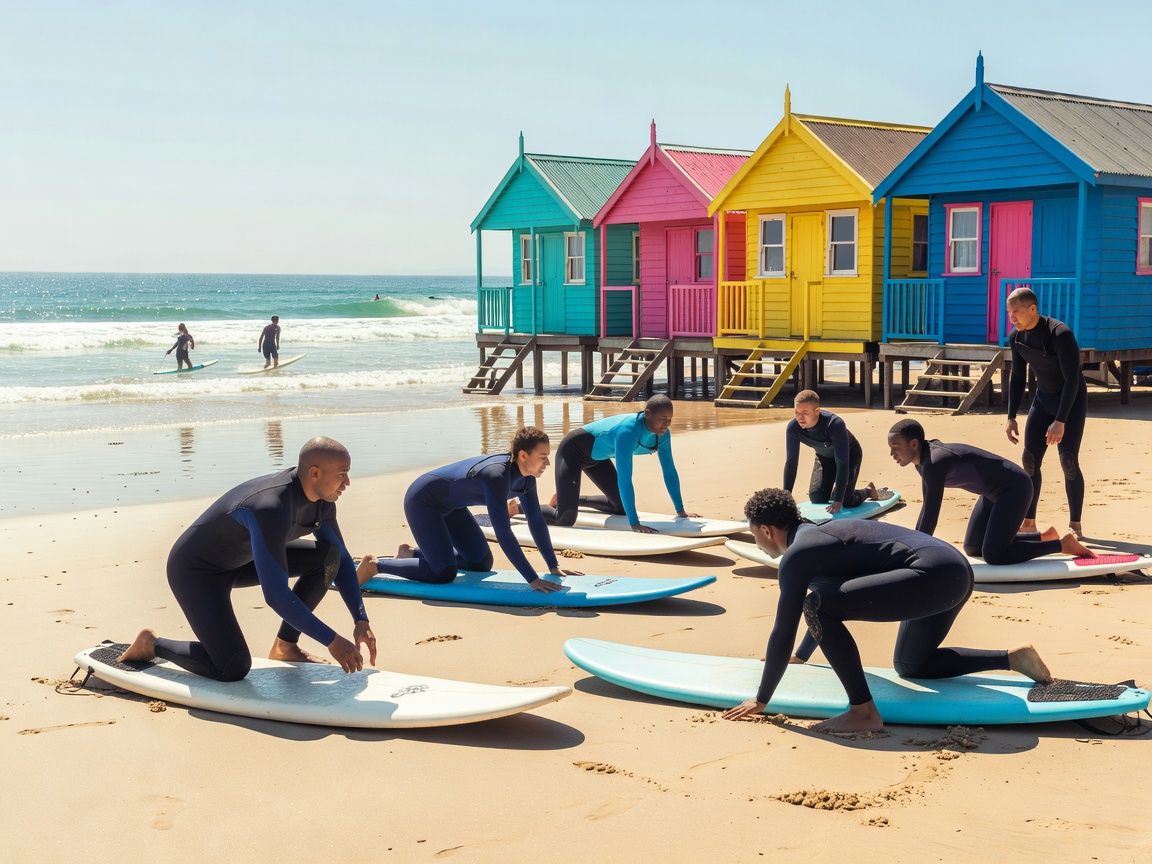 Lesson-friendly context
A broad beach with a strong teaching identity; weather, currents and water conditions remain part of the decision.
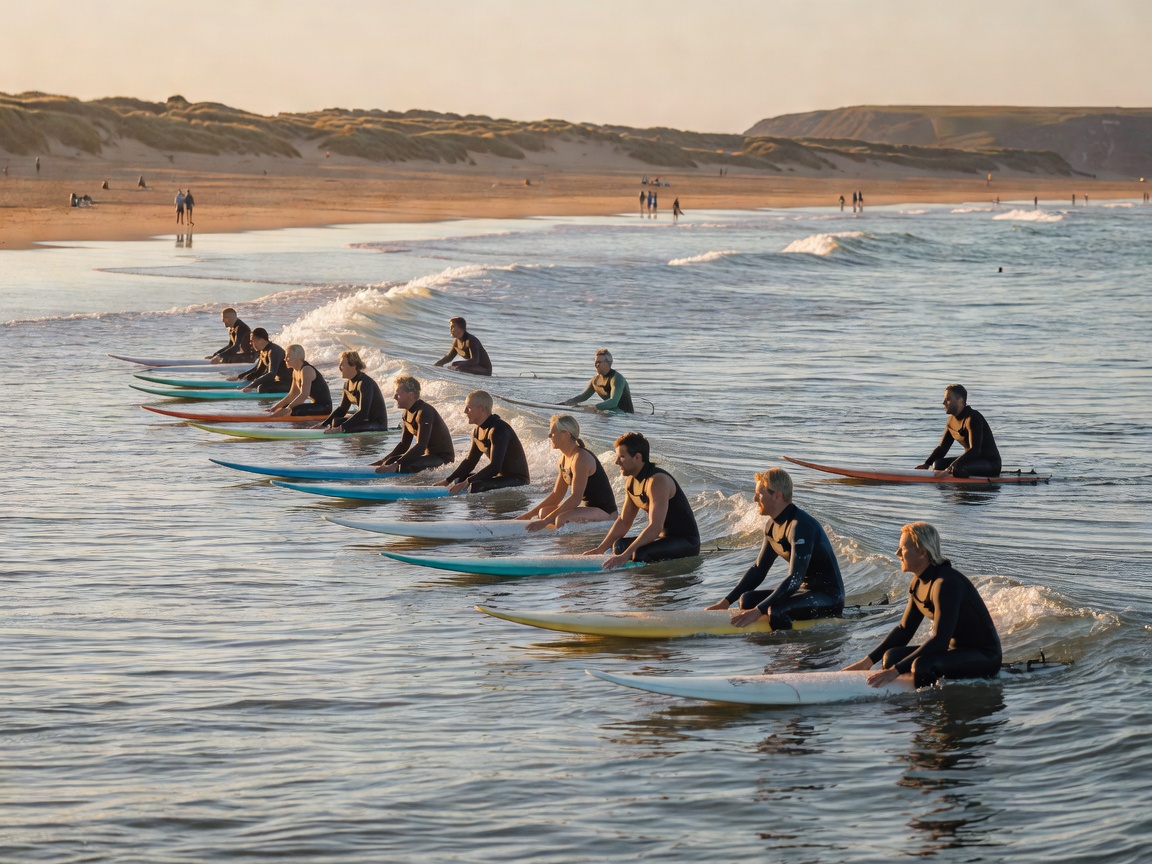 Atlantic energy
Newquay’s well-known surf beach can offer varied peaks and powerful Atlantic swells. Match the day, not the reputation.
Field notes 03
A simple progression builds room to notice the water rather than rush through it.
Study the break from shore and ask an instructor what makes today’s conditions workable.
Learn to carry, turn and control a soft board without swinging it into someone else.
Practise prone riding and pop-ups where there is clear space and direct supervision.
Finish with one observation about timing, safety or etiquette to carry into the next session.

Field notes 04
Malibu, Uluwatu, Waikiki, Fistral and Muizenberg are useful examples because they make contrast visible: point, reef and beach breaks; local lineups and visitor pressure; sheltered lessons and exposed coast.
Fame does not make a wave suitable. A first look at any destination should include a local forecast, access rules, hazards and the advice of qualified local professionals.
Read the world notesField notes 05
Give the rider closest to the breaking part of the wave room. Do not paddle into a take-off zone blindly. Apologise plainly when you make a mistake.
Read the lineup checklistField notes 06
What makes a beach break change? Is a longer board easier? When should a beginner sit out?
See practical answersField notes 07
We compare enduring beach features, use named places carefully and point readers toward local instruction and established safety information.
How we take notesAbout cookies
Some cookies are needed for the site to work. Others help us understand how it is used. You can change your choice later. More about cookies